
2026-10-09 · Brian Walker
Common AC Issues Caused by Carson City Dust and Wind
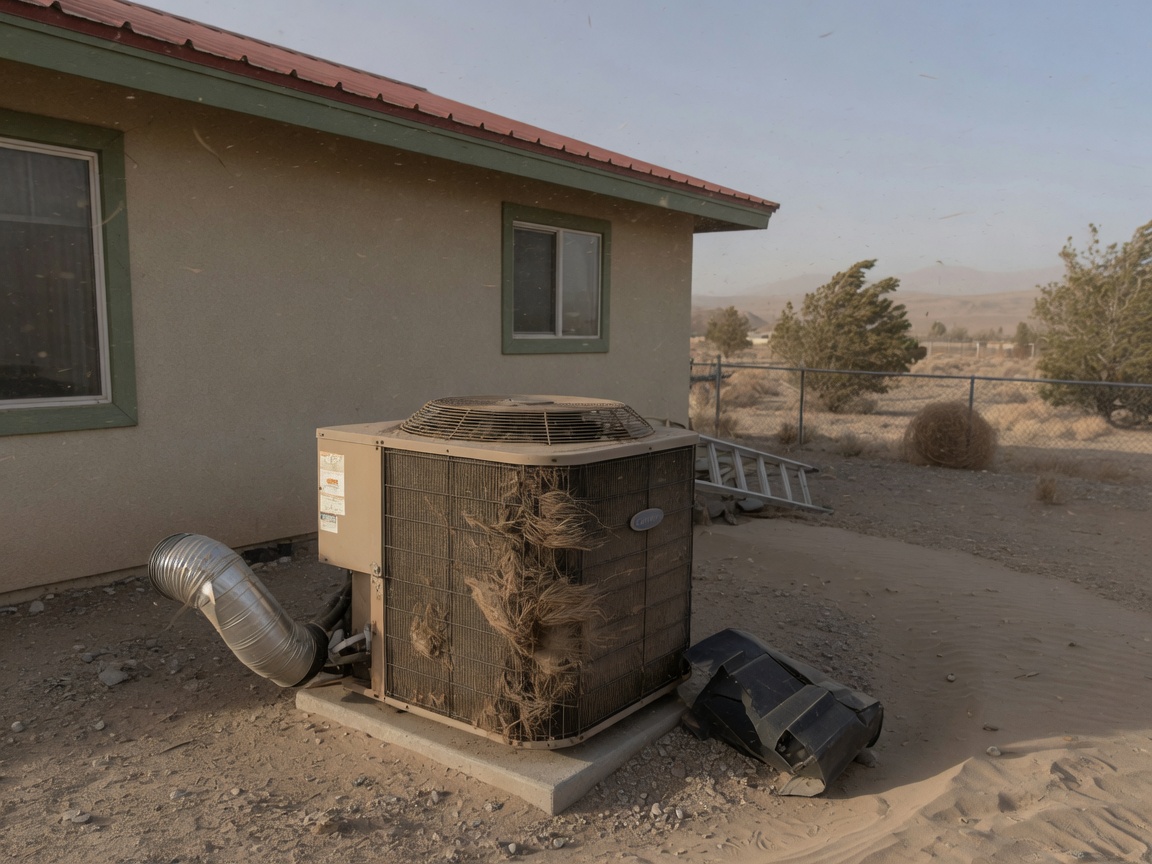
Carson City’s high desert winds drive fine alkaline dust into AC systems, causing clogged filters within 3–6 weeks during peak summer and coil fouling that cuts efficiency by 15–25% in homes across Downtown Carson City, Lakeview, and North Carson. The same gusts push debris against outdoor units near the Nevada State Capitol and Carson City Mint, bending fins and restricting airflow when temperatures climb toward 95 degrees.
Dust Accumulation on Evaporator Coils
Fine particles from the surrounding high desert settle on evaporator coils faster than in Reno or Minden because Carson City sits in a wind corridor between the Sierra and the valley floor. Once dust mixes with condensate it forms a insulating layer that forces the compressor to run longer cycles. Technicians routinely find 1/8-inch buildup on coils in 15-year-old homes in North Carson after one windy season. This restricts heat transfer and raises indoor humidity even when the unit appears to be running. Regular coil inspection prevents the pattern from turning into frozen lines or tripped breakers during July heat.
Wind-Driven Debris and Outdoor Unit Damage
Strong afternoon winds funnel gravel, pine needles, and cottonwood fluff against condenser coils in Lakeview neighborhoods. Bent fins reduce airflow across the coil face, raising head pressure and shortening compressor life. In older single-story homes near the Carson City Mint, units placed on the prevailing wind side show visible denting within two seasons. Homeowners who install simple wind screens or reposition units away from open exposures cut debris impact without altering performance. Checking fin straightness each spring before temperatures hit 95 degrees avoids the cascade into higher repair frequency.
Rapid Filter Loading in High Desert Conditions
Standard 1-inch fiberglass filters in Carson City systems load with dust in 2–4 weeks when winds exceed 20 mph for several consecutive days. Restricted airflow drops static pressure across the blower and can pull unfiltered air through gaps in ductwork common to 1970s–1990s housing stock in Downtown Carson City. Switching to a 4-inch media filter or scheduling monthly checks during May–September keeps the system moving the designed 350–400 cfm per ton. Neglected filters also send dust downstream into supply ducts, raising the cost of later HVAC Duct Cleaning.
Efficiency Loss and Repair Triggers
Dust and wind together shorten the interval between AC Repair visits because dirty coils and restricted filters drive up amperage draw on both fan and compressor motors. In North Carson, systems that once lasted 12–15 years now require capacitor or contactor replacement at 8–10 years when maintenance is skipped. Monitoring the temperature split across the evaporator—normally 15–20 degrees—gives an early warning before efficiency falls further. Homeowners who combine seasonal AC Maintenance with the checklist in How to Check Your AC Before Carson City Summer Temperatures Hit 95 Degrees catch these issues while parts still cost under $300 rather than facing full motor replacement.
Practical Steps for Carson City Homeowners
Inspect outdoor coils monthly for visible debris and rinse with low-pressure water when the unit is off. Replace or clean filters on a 21–30 day cycle from May through September, especially after wind events reported near Lake Tahoe passes. Keep vegetation trimmed 24 inches from the condenser to reduce wind-driven material. Track the age of the system and note rising electric bills; a 10–15% increase often signals dust-related airflow loss before a breakdown occurs. These habits match the actual conditions in Carson City rather than generic national advice.